Monday, 24 March 2014

Field Lighting Exercise

As a part of the second semester, we had to do a Field Lighting Exercise. I teamed up with a bunch of very skilled guys - Danny, Liam and Jowayne. All of the guys brought something special into the shot. We were given the assignment to recreate a scene from Memento. Memeno as a film is very complex in the way it is lid. It has got hard shadows, and a very hight contrast. All the flashback scenes are shot in black and white, but my group and me decided that it would be a challenge to try and recreate this scenario.

The shoot was done with Dedolights and a Blackmagic Cinema Camera we were fortunate enough to borrow from a third year student. We started by tearing the scene apart piece for piece to analyse what kind of shots we were eventually going to reproduce, and then smaking a list over the different shots afterwards. It turned out to be a good idea, since moving the camera around a lot would have caused a lot of repositioning with the lights and the camera.

We were fortunate enough to have an actor on set, that had done a bit of acting before, and it took the shoot to a higher level. The took turns in setting up the lights and shooting the scenes, but mainly Liam was in charge of the camera, and I in charge of the lights.

Along the way we encountered trouble, as the medium we shot on wasn't formatted correctly, which caused all our hard work to go to waste. Fortunately enough,  Danny was able to stitch together the pieces we had, and smooth them out.

In retrospect, I think we should have shot the whole thing in ProRes 422 instead of RAW. ProRes is easier on the SSD drive it records to, and therefore we might have had some uasble footage.

The final result can be seen here:


Tuesday, 11 March 2014

Evaluation of Skills for a post-production careerer

Through the various lectures we had throughout the year (minus the ones I missed because of my collarbone fracture) I learned a lot of skills on how to approach the industry professionally.

First of all, I got a lot better at video editing through awareness of the various methods used to create a specific feel and look in a film. Fast cutting rhythm, slow cutting rhythm, pace, cut selection and many other skills contributed to my knowledge and future careerer. I got a look into the industry through the program Avid Media Composer, and I got more aware of what is important as an editor. Among these skills are awareness of codec and its use. Online/ Offline editing and colour grading.

In the year I studied at Middlesex University, I expanded my cinematic view. But most significantly on the subject of colour. I slowly became aware of the green tint in the fluorescent lights, daylight/ tungsten temperature lights importance in a shot and how to recreate a specific feeling through specific use of colour.

I slowly became more confident with what I do and how I want to do it in terms of both production and post-production, and I feel like I can go out and make a film almost on my own. I would have the skills to fill in a lot of the roles, but in my year I also learned the importance of a good and efficient team.

Now more than ever I know my limitations and possibilities. I found out that I was very impatient on a set. If the production didn't constantly moved on, I became annoyed and bored. I need things to happen while in the moment. I find this way of working highly efficient, and I will in the future do my best to find the good spot, to where I can be productive but also have fun.


Sunday, 2 March 2014

Colour Concept: A Single Man

There is no doubt that colour has a huge influence on the audience. How a director chooses to colour his film is his stylistic choice, and it will in the end affect the audiences feeling and believes towards a character. 

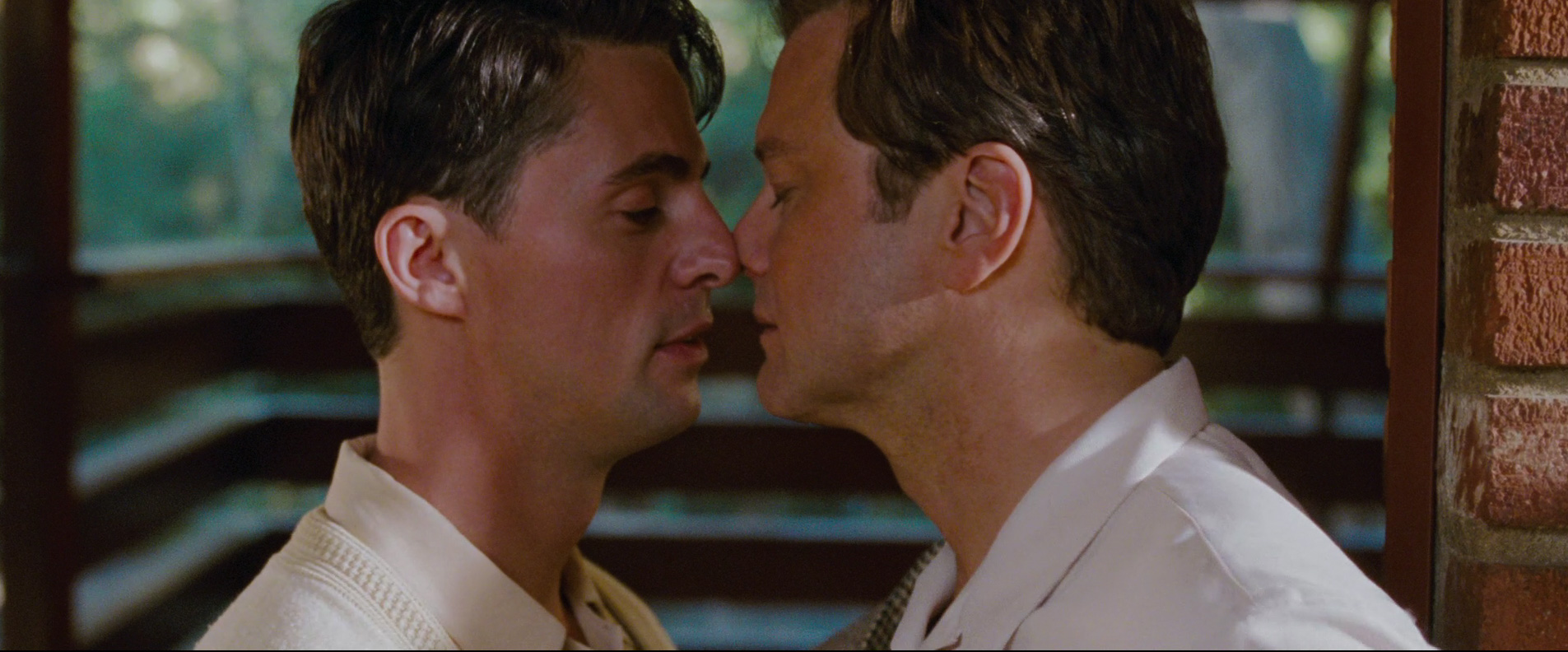
I have chosen to look at the colours in the film "A Single Man" from 2009. In this film the main character George, played by Colin Firth, is a homosexual middle-aged professor, who lost his love in a car accident.

There is a distinct 60's feeling about the whole film. Not only because of the clothes, but because of the colours and grain of the film. The whole film is very pleasing to the eye, and all the details and distinct colours bring the film up to a very high level of professionalism. 


The colours are very important for this film, as they are what makes the film work. Everything is seen through the eyes of George, and his character influences the colours throughout the film.


The film is graded in a low saturated and medium/high contrast style, as we are presented to George's world. The low saturation is meant as a state of depression for George, as he plans to take his own life prior to the accident that killed his lover.

As the film progresses, we are taken back in time in several flashbacks to when George and his lover was still together. The saturation in high, the skin-tones warm, and the whole image is very pleasing to the eye. In contrast to the main shots in the film, we clearly see George as a happy man in the flashbacks.


A very noticeable shot is the flashback scene, in where George and his lover are on the beach. The scene is shot in black and white as the only on of it's type in the film. There is a hard shadow on George's lover, indicating that the memory is fading or something terrible is about to happen to him.

  
George finds comfort and love in one of his students - the young Kenny. Kenny is the sweet young student, with a deep fascination for George. As Kenny enter the stage, the colour grading changes. From the cold and low saturated state to the saturated and pleasant state. 

Whenever saturation is introduces into the image, the viewer will perceive it as a sign of George's well being improves. A little colour is painted on his tragic life.